GLOCK Safeties
Although GLOCK advertises three safeties with its SAFE ACTION System, by my count there are actually ten safeties.
SAFE ACTION System
GLOCK’s SAFE ACTION System includes automatic independently-operating mechanical safeties are built into the fire control system of the pistol. It allows the user to concentrate fully on shooting without having any additional actions to disengage and reengage safeties.
The SAFE ACTION System is a fully automatic safety system consisting of passive, independently operating, mechanical safeties. Each safety disengages sequentially as the trigger is pulled and automatically re-engages when the trigger is released.
Trigger Safety
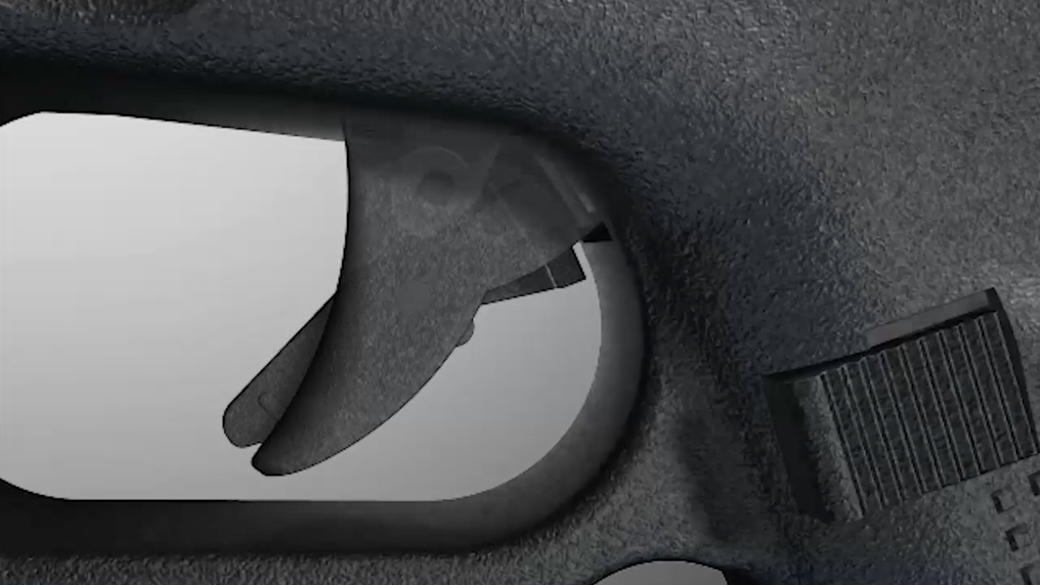
The trigger safety is the first safety in the firing sequence. It is incorporated into the trigger in the form of a lever and when it is engaged blocks the trigger from moving rearward. To fire the pistol, the trigger safety and the trigger itself must be deliberately depressed at the same time. If the trigger safety is not depressed, the trigger will not move rearwards and allow the pistol to fire.
The trigger safety is designed to prevent the pistol from firing if it’s dropped or if the trigger is subjected to any pressure that isn’t a direct firing pull.
Firing Pin Safety
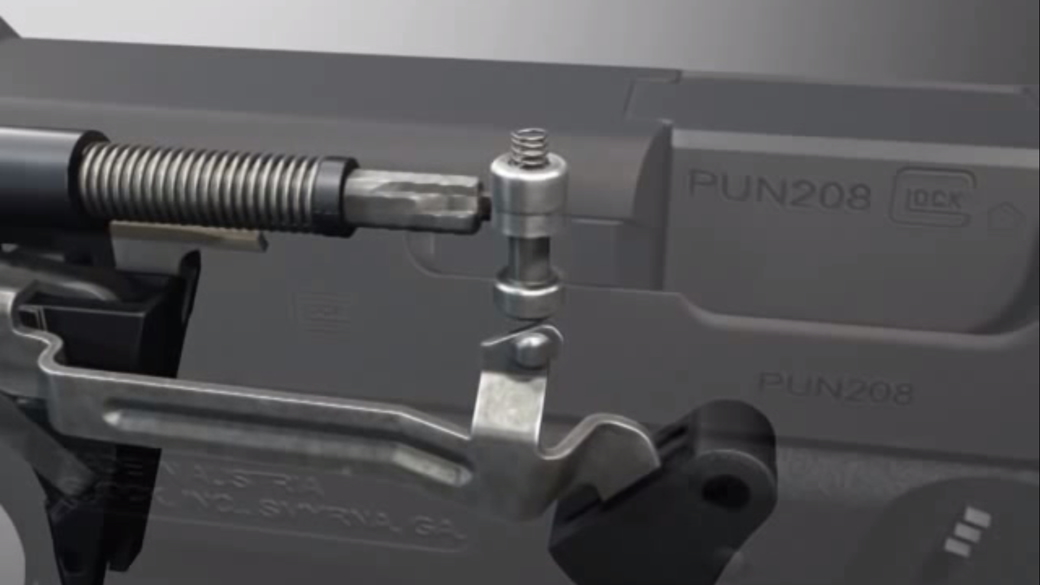
The second safety, the firing pin safety, mechanically blocks the firing pin from moving forward in the ready-to-fire condition. As the trigger is pulled rearward, the trigger bar pushes the firing pin safety up and frees the firing pin channel. If you decide not to fire and release the trigger, the firing pin safety automatically reengages.
Drop Safety
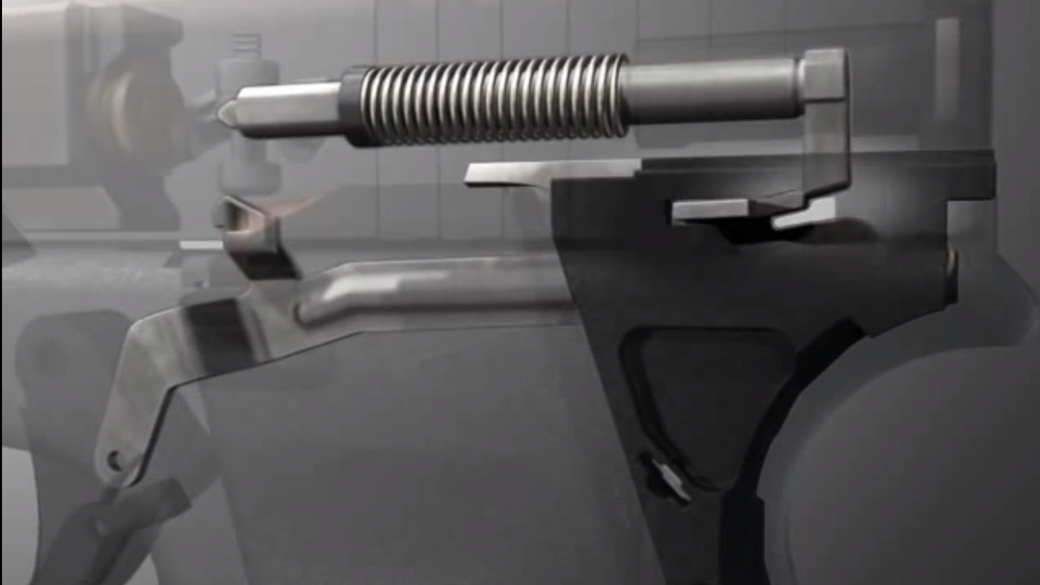
The third safety involves the trigger bar, which rests on the safety ramp within the trigger mechanism housing. The trigger bar engages the rear portion of the firing pin and prevents the firing pin from moving forward. As the trigger is pulled rearward the trigger bar lowers down the safety ramp and allows the release of the firing pin. After firing, the trigger bar moves upward and re-engages the firing pin. As the trigger is released, all safeties automatically reengage.
Automatic engagement
A special feature of the SAFE ACTION System allows the trigger to reset with only limited forward movement of the trigger, so you don't have to completely release the trigger in order to fire a second controlled shot or when you need to fire several rounds quickly. After a round is fired, you only have to release the trigger until it resets, which you can hear and feel.
All the above pistol safeties automatically re-engage when you release the trigger to its forward position.
Additional safeties
While there are the above advertised safeties, each GLOCK pistol has other safety features. These safeties are also automatic, being built into the design of the pistol.
Connector ‘weight’
GLOCK offers various connectors that change the weight
and responsiveness of the trigger. The 5.5-pound
(standard) connector offers a great balance of resistance to pulling the trigger (for safety) and ease of firing (for accuracy). The 5-pound
(dot) connector reduces this resistance a bit, while increasing the trigger travel needed to fire the weapon. The 4.5-pound
(minus) connector further reduces resistance, while further increasing trigger travel. The 8-pound
(plus) connector increases resistance, and reduces trigger travel. The connector supplied with your GLOCK is usually the best option, with self-defense pistols having heavier triggers, and competition models coming with lighter triggers.
Once installed, the characteristics of these connectors become a built-in part of the trigger control system, so no further user intervention is required for them to work as designed.
Trigger position
When the trigger is in the rearward position at rest, the gun is either empty or the cartridge did not go off when the trigger was pulled. You should verify the condition, of course, rather than assuming that the rearward position of the trigger means the pistol is safe, but at a glance you can see that the gun is not ready to fire.
WARNING: If the trigger is in the forward position the pistol may be loaded. The best practice is to trip the trigger each time after clearing your weapon of ammunition to allow your GLOCK to give you a visual indication that it is in its safe condition.
NOTE: The GLOCK Performance Trigger defeats this safety.
Magazine status
GLOCK pistols can be fired with the magazine removed. If you need to reload with a round in the chamber, you can still protect yourself with your GLOCK even with the magazine out, as long as there is a round in the chamber. Therefore, you can reload without disarming yourself during the process.
Loaded-chamber indicator
Modern GLOCK pistols have a raised section on the outside surface of the extractor that allows the shooter to check if there is a round in the chamber, either visually or by using the tip of his finger. This is not a substitute for press check, but it is useful in low-light conditions.
Different slide return to battery with a round in the chamber
The best way to check if your GLOCK pistol has a round in the chamber is via the press check — pressing the slide back a fraction of an inch and looking into the gap between the breech face and the rear of the barrel, and then pulling the slide forward into battery. However, with a round in the chamber, your GLOCK pistol will return to battery differently depending on if the chamber is empty or if the gun is loaded. Although this difference should not be definitive in determining the gun’s condition, again, it can be useful in low-light conditions.
Unsupported chamber
Unsupported chamber
refers to the way the chamber encloses the brass of the round in the chamber. GLOCK chambers are unsupported
at the bottom, which enhances reliability of feeding and offers the user a margin of safety if the round in the chamber is a hot
round.
NOTE: GLOCK recommends that you use only factory-produced ammunition in good condition, and of the proper caliber for your pistol.
In just about any gun, if you shoot a round that has more than the recommended load (such as hand-loads), there is a risk of gun damage and personal injury. These risks are not unique to GLOCK pistols. When using a round that is too hot, the brass may bulge or split open, which could allow expanding gases to exit the chamber toward the rear instead of toward the front. The unsupported chamber directs these rearward-exiting gases downward into the magazine well, containing them within the stock of the gun, and reducing the chances of personal injury despite possible damage to the weapon.